


You Didn’t Just Hire a Person. You Hired Their Work Culture
 By Admin
Every new hire brings more than experience and qualifications. They also bring habits, standards and assumptions about how work should be done. A few days ago, I was having a conversation with someone who was frustrated with the human resource function in her organisation. As she explained the situation, something became apparent. The person responsible for HR had previously worked in another organisation and appeared to be carrying forward some of the practices and ways of working from that environment. It got me thinking about something we rarely consider deeply enough when hiring people. When you hire someone, you are not just bringing their experience into your organisation. You may also be importing the culture they have become accustomed to. And depending on where your organisation wants to go, that could either be an advantage or a serious setback. Experience is not always the same as capability When organisations recruit, they often look at a candidate’s qualifications, years of experience, previous job titles and the companies they have worked for. These are important considerations. But perhaps there is another question we should be asking: What did this person learn to consider normal in their previous workplace? Think about it. Someone who has spent ten years in an organisation where decisions take weeks may have learnt to accept delays as normal. Someone who has worked in an environment where managers rarely take responsibility may have become comfortable passing problems to other departments. Someone who has spent years in a business where customer complaints are treated as inconveniences may struggle to appreciate the urgency required in a customer-focused organisation. They may be talented. They may be qualified. They may even have performed well in their previous role. But their understanding of how work should be done may not align with the standards your organisation is trying to establish. A person’s experience tells you where they have been. It doesn’t automatically tell you whether they are equipped for where you want to go. Your organisation may be buying the wrong kind of experience Imagine a business that wants to position itself as a premium service provider. It wants faster response times, stronger accountability, better reporting, consistent service delivery and a more professional customer experience. Now imagine hiring a manager whose previous workplace operated with very different standards. The new manager may introduce familiar routines, reporting structures and management habits. They may not necessarily be trying to undermine the organisation. They may simply be doing what they know. After all, those practices worked in the environment they came from, or at least became accepted there. But what works in one organisation may not work in another. A system designed for a low-cost, high-volume operation may not be suitable for a business competing on quality and reliability. A management style that works in a small, informal enterprise may be inadequate in a company dealing with complex operations and demanding clients. The danger is not always hiring an incompetent person. Sometimes, it is hiring a competent person whose standards are incompatible with your ambitions. People don’t leave their habits at the office gate Organisational culture is not only what appears in a company’s values statement. It is what people repeatedly do. It is how they respond when something goes wrong. It is whether they report a problem or conceal it. It is how they supervise teams, treat customers, manage deadlines and make decisions when nobody is watching. These behaviours are learnt over time. When someone joins a new organisation, they naturally draw on what they already know. Unless the new environment clearly communicates different expectations, those familiar behaviours can easily become the default. And when the person is a manager, the impact can be even greater. Their habits may influence an entire department. Their standards may become the standards their team follows. Their approach to accountability may determine whether problems are resolved or repeatedly ignored. One recruitment decision can therefore influence much more than one person’s performance. Hire for the organisation you are building This does not mean organisations should only recruit from their direct competitors or hire people from companies with bigger names. That would be a mistake. A person from a smaller organisation may bring exceptional discipline, fresh thinking and a stronger work ethic than someone from a prestigious company. Likewise, a person from a top-tier organisation may struggle to adapt to a different operating environment. The issue is not simply where someone worked. It is what they learnt there, what they achieved, and what they can bring into your organisation. Recruitment should therefore go beyond asking candidates to describe their previous responsibilities. Ask how they handled operational failures. Ask how they improved a process. Ask what they did when a team repeatedly missed its targets. Ask what standards they introduced and how they measured results. And, where appropriate, establish what the candidate’s previous environment expected of them. Did they work in a culture of accountability? Were they expected to take initiative? How were performance and customer satisfaction measured? These questions help reveal whether the person can operate at the level your organisation requires. Don’t just assess the candidate. Assess the fit. There is another side to this conversation. Even the right person can struggle if the organisation fails to communicate its expectations. You cannot recruit someone, leave them to rely entirely on their previous experience, and then complain when they reproduce familiar practices. If you want a different culture, you must make it clear. Define the standards. Establish the operating procedures. Set measurable expectations. Provide the necessary training. Hold people accountable. And, importantly, give them the authority and resources to deliver what you expect.
Read More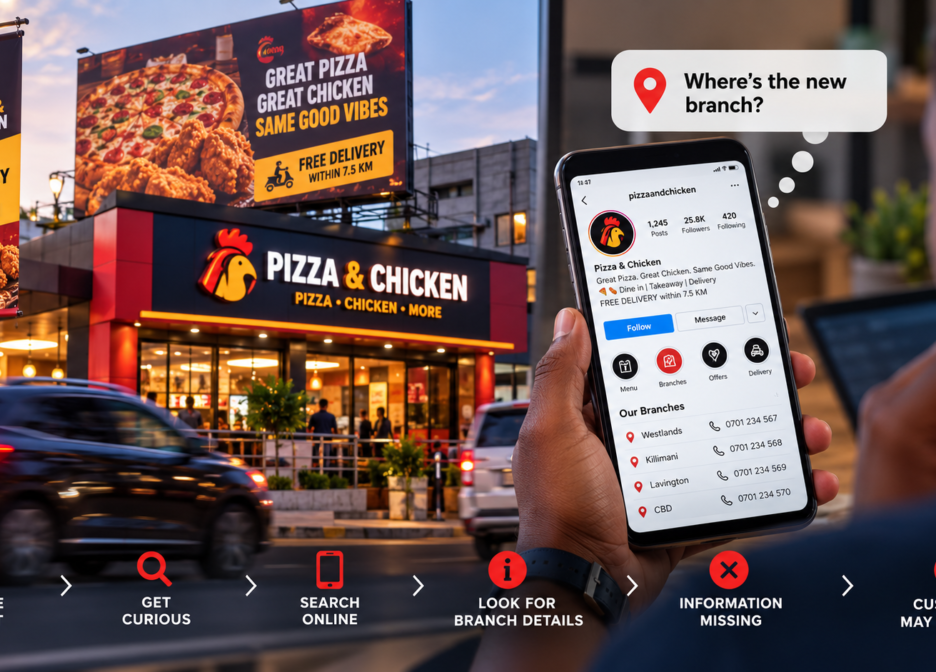
The Campaign Is Live. Is Your Business Ready?
By Admin
A few weeks ago, I noticed a new pizza and chicken brand while driving around my neighbourhood. What caught my attention first was the branding. The colours stood out, and the new location was hard to miss. I didn’t think much of it at first. Then I started seeing the brand everywhere. Social media adverts.
Read More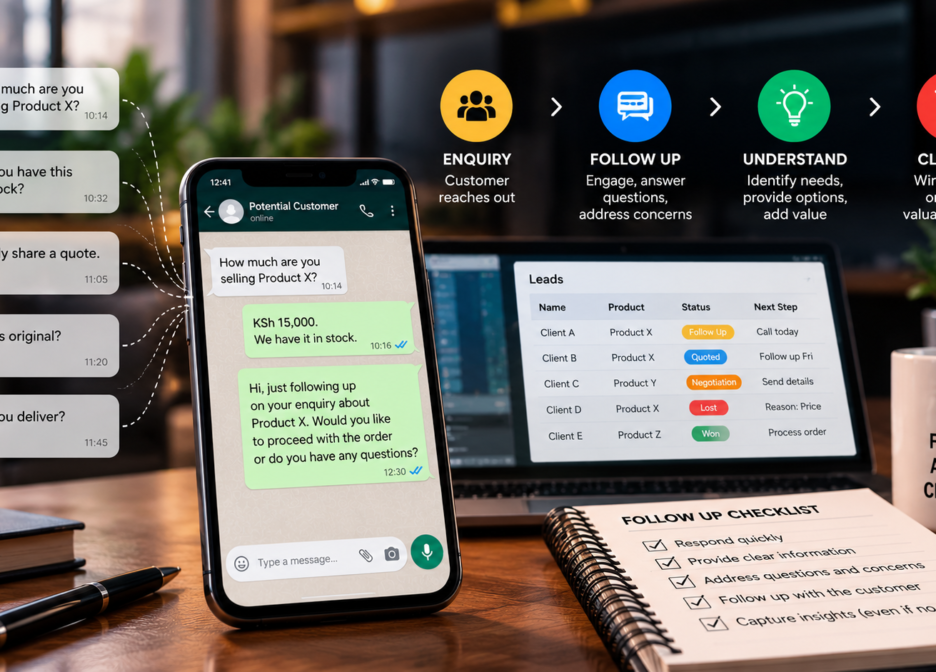
The Lead Is Not the Sale
By Admin
One thing I have noticed in business is that customers rarely speak to only one supplier. If someone is looking for a product, they will probably call two, three or even five businesses. They may search on Google.They may ask on WhatsApp.They may send the same message to several suppliers on social media. Then they
Read More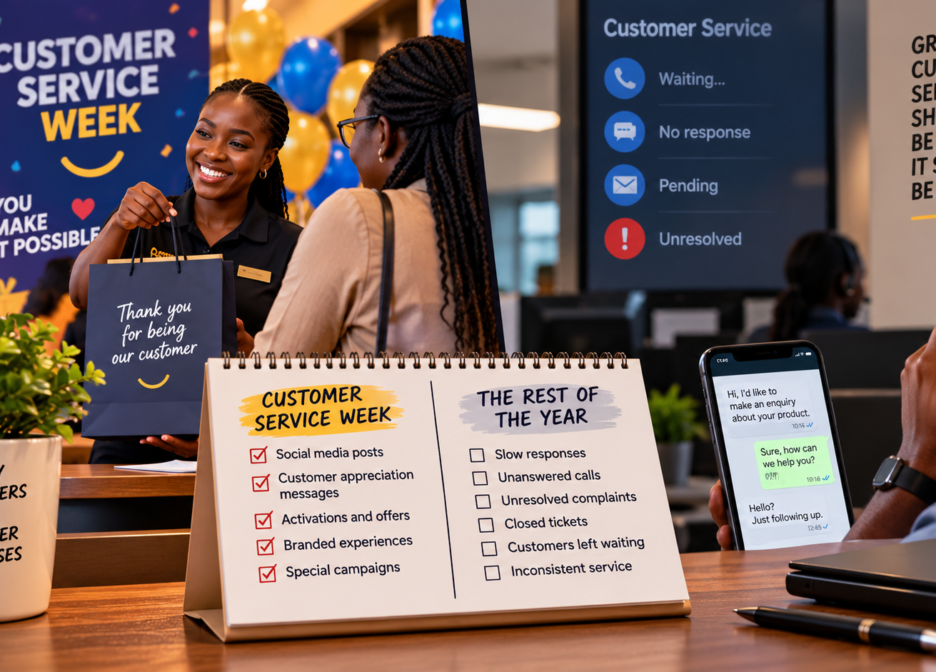
Customer Service Shouldn’t Be a Week
By Admin
Two weeks ago, businesses across the country were celebrating Customer Service Week. There were social media posts. There were messages to customers. There were activations, offers, appreciation events and branded experiences. And, of course, there were plenty of messages telling customers how important they are. There is nothing wrong with celebrating customers. In fact, I think
Read More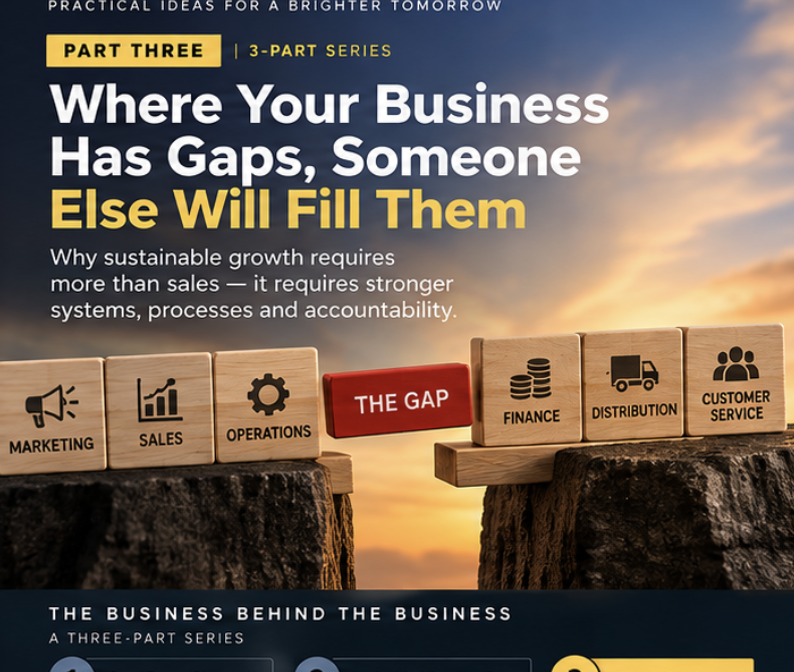
Part 3: Where Your Business Has Gaps, Someone Else Will Fill Them
By Admin
In the first two parts of this series, we looked at two important aspects of running a business: Own every channel. Make verification easy. But there is a bigger issue sitting underneath both. The gaps between your systems. Businesses rarely fail because they have absolutely no processes. More often, problems occur because one process doesn’t
Read More
Part 2: Who Are You Really Dealing With?
By Admin
In business, trust is often built through very ordinary things. A company website. A branded email address. A quotation. An invoice. A phone call. A WhatsApp conversation. A person introducing themselves as a sales representative. None of these things, on their own, proves that the person on the other end is legitimate. Yet we increasingly
Read More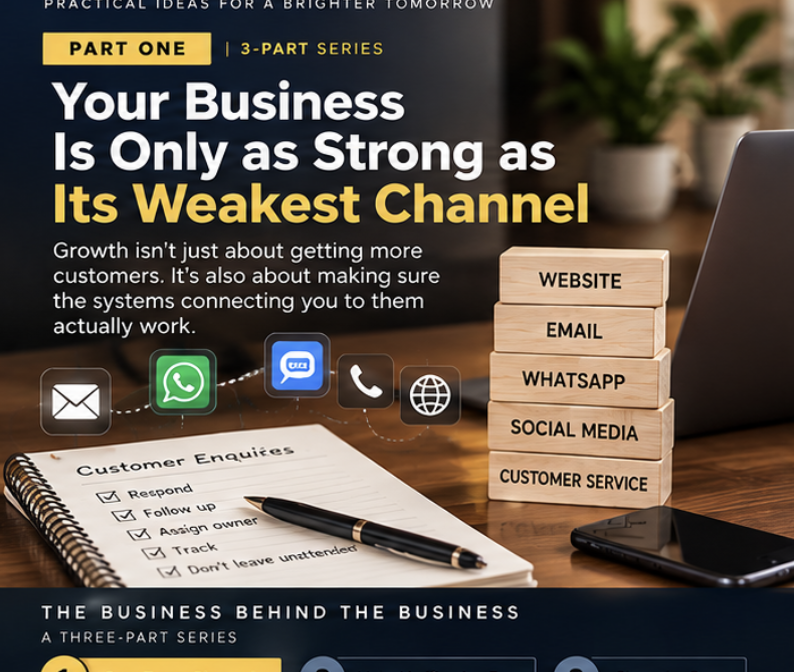
Part 1: Your Business Is Only as Strong as Its Weakest Channel
By Admin
Growth isn’t just about getting more customers. It’s also about making sure the systems connecting your business to those customers actually work. We spend a lot of time talking about how businesses grow. More customers. More sales. More products. More branches. More distributors. But there is another side of growth that doesn’t get nearly as
Read More